
Suggested Readings
A few recommendations by Figs in Winter for your reading pleasure
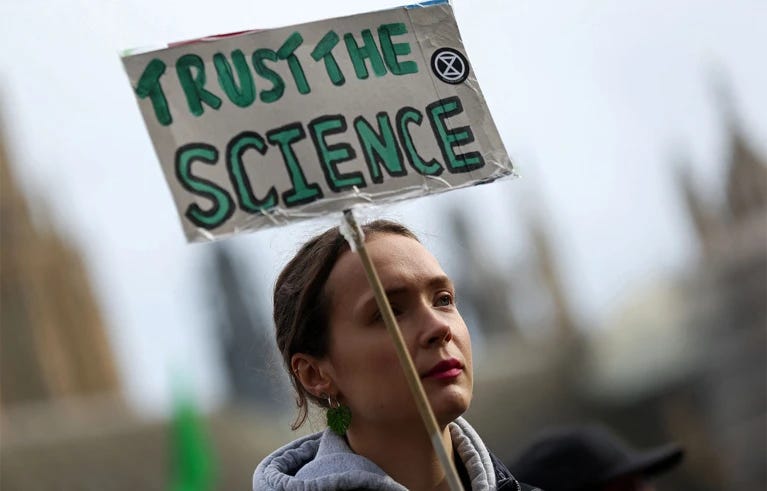
Have people stopped trusting science? The data tell a surprising story. From the United States to Europe to Brazil, there is a pervasive sense that trust in science has collapsed.
A UK survey published in January found that only 40% of people think that science information they hear is “generally true”. Another global poll showed that 70% of people believe at least one false or unproven claim, such as that the risks of childhood vaccines outweigh the benefits.
In the United States, President Donald Trump and his administration are using the idea that science is not trustworthy as one reason to cut research budgets, reject evidence-based medical advice and exert unprecedented political control over research. “Over the last 5 years, confidence that scientists act in the best interests of the public has fallen significantly,” said Trump in an executive order last year.
Even the Vatican is voicing concern. This September, a meeting at the Pontifical Academy of Sciences will examine how “the crisis of trust in science has become a pressing issue”. … (Nature)
Hello from Torino, Italy! (On Traveling, Returning, and Boxing) Since I arrived in Turin in northern Italy last month, life has been somewhat of a heat-induced flurry. What I’ve just read: Yesteryear (I have much to say about that one), re-reading Calvino’s The Watcher, which takes place here in Torino, and an essay on V. Woolf in Margot Livesey’s “The Hidden Machinery” and two books by friends. Also reading with dark glee about recent Chat/AI tics: metaphors that don’t hold up to scrutiny and “it’s not X, it’s Y.”
The week I arrived, I took a three day workshop on Cicero with Massimo, John Sellars, and Rob Colter and celebrated the launch of MBF’s truly brilliant Cicero book, How to Be A (Happy) Skeptic: The Power of Doubt In A Meaningful Life also a book launch with philosopher Skye Cleary. (Alas, we missed the women’s boxing match, Botte della Madonna, that was part of the massive pride march here in Torino). … (Si Omnia Ficta)
The “women are better multitaskers” stereotype is messier than you think. In a TikTok video that has racked up 1.4 million likes, men are handed scissors and a sheet of paper and asked to cut out a Christmas tree while describing their favorite memory with their partner. The men start telling a story, but most trail off as they concentrate on the cutting. In another clip, a woman calmly juggles four different chores while her husband struggles to put on socks and hold a conversation simultaneously.
These videos are designed to make you laugh. But they also reflect and reinforce the idea that women are better multitaskers than men. Studies putting this stereotype to the test have yielded very mixed results. Yet the idea that there is a gender difference in the ability to multitask remains lodged in the public mind. Researchers think there are various reasons why the stereotype persists. … (Big Think)
5 dangerous lies we tell ourselves, according to philosophy. We live according to our beliefs. Some beliefs we know well. A Christian knows they believe in God. An ethical vegetarian knows they believe eating animals is wrong. But other beliefs swish around in the rock pools of our unconscious. They are tacit assumptions that motivate our actions but never appear on an employment contract or in a legal document. And even though we rarely pause to examine them, these beliefs or narratives will steer our lives. They are why we get out of bed, think the way we do, and chase the dreams we have. … (Mini Philosophy)
AI and the anguish of choosing. While rereading Jean-Paul Sartre’s 1945 lecture Existentialism Is a Humanism for my Aeon magazine essay, I began to wonder about how existential thinking applies to AI.
Sartre argues that you’re the sum of your actions, implying that what you do is what you mean. He said this over 80 years ago, to a room that had run out of chairs and was overflowing with people trying to make sense of WWII and figure out how to live after the atrocities had thrown their understanding of the world and their values into question. … (Skye Cleary)
It was a pleasure to discuss your fabulous new book! And thanks for the shout out about my Aeon essay :)
"One of the most persistent narratives of our time — one sponsored by Disney and Hallmark — is the idea of a soulmate."
This doesn't go against his general point, but um... "Frozen", "Brave", "Maleficent", the first "Mulan", probably missing some, haven't kept that much up to date on Disney.