
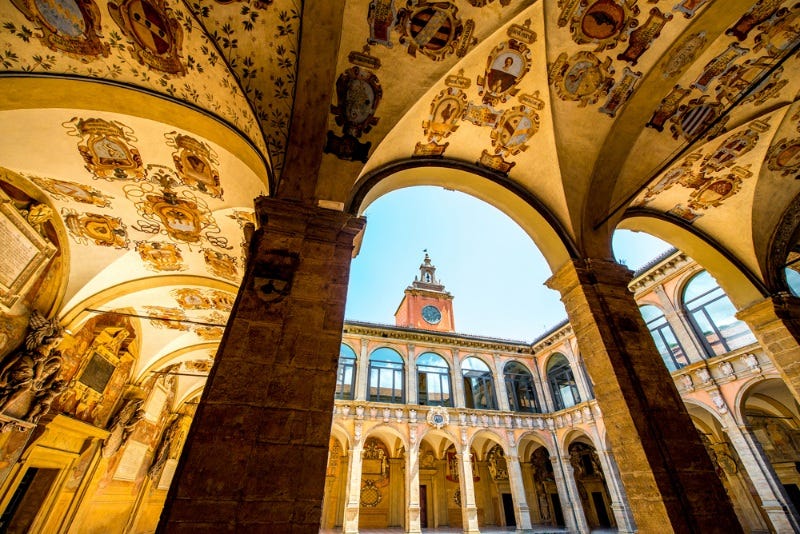
I am, and have been for most of my adult life, a university professor. My first post was at the University of Tennessee in Knoxville, as an assistant professor in the Department of Botany, doing research on plant evolutionary genetics and ecology. There I completed the three standard classical steps of an academic career (assistant, associate, and full professor) before moving to Stony Brook University, near New York City, in the Department of Ecology and Evolution.
At that point, midlife crisis struck and I shifted career somewhat dramatically, moving to the City University of New York (first Lehman College, then the City College of NY, where I am now) as a philosopher specializing in philosophy of science, with the privilege of being appointed as an endowed (similar to distinguished) professor. Since I am now a few years, potentially, from retirement, I don’t foresee any other major steps in my career, though of course you never know.
But what exactly is a professor? Or a university? The two notions are, obviously, deeply intertwined, but it may be good to take a look at their evolution now that we are facing major potential disruptions to the system of higher education, courtesy of LLMs and related technology. (Unless this will turn out to be another ephemeral tech bubble, we’ll see.) Perhaps understanding the history of universities and professorships will give us some better tools to deal with the (allegedly) coming AI apocalypse.
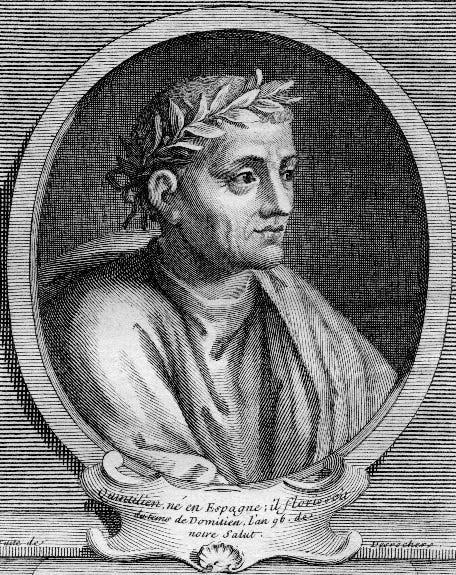
Let’s start with “professor”: the word comes from the Latin profiteri – to declare publicly, to avow. A professor was originally someone who publicly professed a subject, i.e. announced himself a teacher of it. Under the emperor Vespasian (c. 71 CE) Rome created salaried public chairs of rhetoric, one of which was held by the educator and rhetorician Marcus Fabius Quintilianus, popularly known as Quintilian (35-100 CE). This was the first instance of “professor” as a stipendiary office rather than a self-description.
In the thirteenth-century European university (more on that in a moment) the operative titles were magister and doctor (from docere, to teach). The master’s degree gave admission to the teaching guild, but “professor” appears as an alternative descriptor – for instance: sacrae theologiae professor – with no distinct standing. The meaningful distinction was regent versus non-regent: i.e., whether you were actually lecturing. It is also interesting to note the confessional residue in the word: professors long had to profess articles of faith, and those requirements outlasted the Reformation by centuries.
The office of professor then solidified when endowments began to be used to attach a salary to a named position. (Like mine: I am the K.D. Irani professor of philosophy at the City College of New York.) Among the early examples we find Lady Margaret Beaufort’s divinity professorships at Cambridge and Oxford (1502), Henry VIII’s five Regius chairs at each (1540, in divinity, civil law, physic, Hebrew, and Greek), and François I’s royal lecteurs at what became the Collège de France (1530). By now a professor held something: a unique chair per discipline rather than merely belonging to a faculty.
