
Suggested Readings
A few recommendations by Figs in Winter for your reading pleasure
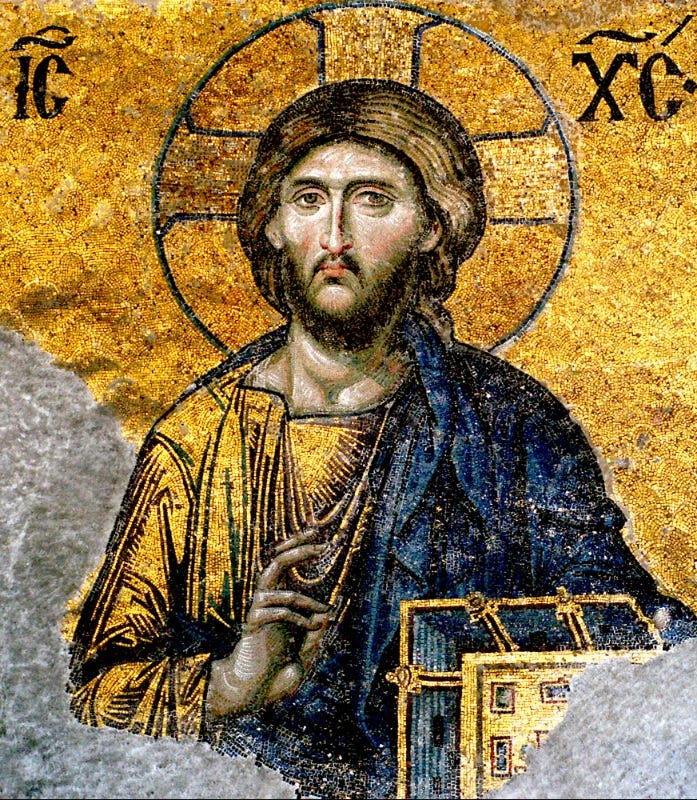
Why historians can only give Jesus a one-sentence biography. Who was Jesus of Nazareth? As one of the most important figures in world history, you’ll likely have a ready answer to this question. Many will picture a man with long, flowing hair and improbably blue eyes garbed in white robes. He could be walking on water, helping the blind to see, teaching a favorite parable, or suffering on the cross. Maybe the scene in your mind is illuminated in stained glass or gilded in medieval splendor or kindled in the Earthly light of a Dutch masterpiece. I’ll wager you didn’t answer my question with one of your own: “Which Jesus do you mean?” Yet, in some ways, it’s an appropriate response. That’s because the historical Jesus has remained an elusive figure for the past 2,000 years, and in his absence, believers and nonbelievers alike have colored him in strikingly different lights. … (Big Think)
We liked remote work. Then we looked at the data. Most Americans say they love working from home. They can skip their commutes, dodge their snippy co-workers and evade their micromanaging bosses. In 2024, nearly 80 percent of workers said they would be happiest if they could work remotely.
Both of us have experienced the advantages of remote work, especially when battling morning sickness or caring for a sick 6-year-old. But on some days, we wouldn’t venture outside or speak face-to-face with another human. We started to wonder whether we — along with the roughly 35 million other Americans who work from home — had stepped into an enormous social experiment. Was remote work as liberating as it felt? … (New York Times)
Elon Musk confirms ancient concerns about the superrich. Ever since Elon Musk became the world’s first trillionaire, people have been trying to grasp the scale of his incomprehensible fortune.
Some have noted that a stack of $100 bills amounting to $1 trillion would extend 679 miles high. The economist Steven Durlauf has observed that John D. Rockefeller’s wealth at one point equaled about 1.5 percent of the U.S. gross domestic product and that Mr. Musk’s wealth now amounts to at least twice as much, at more than 3 percent. It may not escape New York Knicks fans that even Jalen Brunson, who makes about $39 million per year, would need to play more than 25,000 seasons to accumulate that kind of money.
But of all the numbers I’ve seen, the one that struck me most forcefully was a calculation in The Times that Mr. Musk’s net worth is five million times as large as that of the average American family.
As a historian of political thought, I immediately thought of Plato, the first Western philosopher to really grapple with economic inequality. In his “Laws,” through the character of the Athenian Stranger, Plato contended that in a thriving republic, if anyone acquired more than four times the wealth of the poorest citizens, he should donate the surplus to the city. Not five million times the wealth of the typical family — four times the wealth of the poorest.
To be sure, it is difficult to imagine how a modern economy would operate with Plato’s proposed constraints on wealth acquisition. But it is not hard for a modern reader to understand the concerns that led him to his radical proposal. … (New York Times)
A philosopher’s 5 tips on how to become the most likeable person in the room. Let’s go back 10,000 years and check in on humanity. While a few communities around the Fertile Crescent have decided it’s a good idea to stay put and grow plants, most people are free-roaming citizens of nowhere. Humans are a nomadic, pack-based species that travel in groups of roughly 20 to 50, hunting animals and gathering wild food. Summers mean long days hunting and preparing because winters are cold, hungry, and dangerous.
The clans, tribes, and families roam the landscape, helping each other out. Give Clive a bit of rest, he’s broken his toe. Let Erica have a bigger cut of deer; she’s just found out she’s pregnant. Everyone helps each other because that’s what you do when it’s you against the world. In the Neolithic world of yesterday, people often tried to be prosocial.
Except for Ralph. Ralph is an unquestionable asshole. He hides extra food in his sack, and he cried with laughter when Clive dropped that rock on his toe. “It’s your own fault for getting pregnant,” he tells Erica, as he claws back her extra slice of meat.
Now imagine that, one day, Ralph eats the wrong berries and he’s almost comatose from a dreadful dysentery. The group gets together, and all agree: Ralph’s an unquestionable asshole. Let’s leave Ralph behind.
To be antisocial is a luxury because we no longer live in a world that quite so obviously depends on the pack. Of course, with welfare states and human rights, Ralph would probably make it through and live a long, if somewhat friendless, life. Today, the issue is not so much one of life or death but of advantage and support. We need to be friendly and sociable to make everything a bit easier. … (Big Think)
Why do we divide politics into left vs. right? Blame France. On September 11th, 1789, France’s newly formed National Assembly voted on whether to grant the king a veto over its laws. This was no arcane point of procedure. As a direct challenge to Louis XVI’s absolute power, it was a hinge moment in the French Revolution.
Defenders of the monarchy, pro veto, gathered to the chairman’s right. Radicals in favor of clipping the king’s powers drifted to his left. From that fateful seating arrangement — in a meeting now more than two centuries past — comes the most powerful shorthand in democratic politics: left versus right.
La gauche, the left, became synonymous with pro-revolutionary forces who wanted to abolish privilege and empower the common citizen. La droite, the right, were the anti-revolutionaries — conservatives scrambling to prop up an old order that was crumbling around them. … (Big Think)
I remember, though I don't know where or how far back, someone proposing legislation that corporations/businesses cannot pay the top "earner" more than 40 times the lowliest "earner." So the board can approve a $10,000,000 annual salary for the CEO--but only if the filing clerk or warehouse worker is paid $250,000 a year. Have to include the value of stock options and chauffeured limousines, of course. Sort of a variation on Plato's theme?
Thanks--now I'm three years behind in my reading and eighty years old! The trend lines are diverging dangerously.