
Suggested Readings
A few recommendations by Figs in Winter for your reading pleasure
Stoic Ethics does not depend upon Physics. Debates about Stoic Ethics sometimes become quite heated online, with a handful of individuals passionately insisting that “Modern Stoicism” is not real “Stoicism” insofar as it, they claim, ignores Stoic Physics. They typically insist that “traditional” Stoicism is synonymous with the view that, in some sense, Stoic Ethics is logically founded upon, or depends upon, Stoic Physics. … (Donald Robertson's Substack)
The “hero’s journey” isn’t as universal as you think. In J.R.R. Tolkien’s 1937 novel The Hobbit, Bilbo Baggins’ quiet, uneventful life is upended by the sudden arrival of the wizard Gandalf, who asks him if he’d like to go on an adventure. Unwilling to trade his comfortable surroundings for the great unknown, Bilbo declines Gandalf’s offer. It’s not until the dwarves question his usefulness that the prideful hobbit decides to tag along and help them reclaim their forlorn homeland. Although initially unsure of his own abilities, Bilbo proves to be the group’s most valuable asset, saving them from danger time and time again. After helping defeat the dragon Smaug, Bilbo returns to the Shire wiser, happier, and more confident. The end. … (Big Think)
Why terrorism futures markets work. If SEBIN (the Venezuelan intelligence agency) had had high-level contact with online prediction market Polymarket, they might have saved Maduro from being captured on January 3. Obviously, they failed to do so. Their bad. The idea of using futures markets for predicting acts of terrorism (or other secret operations like the capture of Maduro) has been around for a long time. Most notably, DARPA experimented with this in the early 2000s, but with disastrous results. Here is why DARPA’s effort failed, and modern independent platforms like Polymarket succeed — and provide not only unique insights into matters of intelligence, but also many other things — perhaps more on that in a future post. … (Brian’s Bullshit-Free Zone)
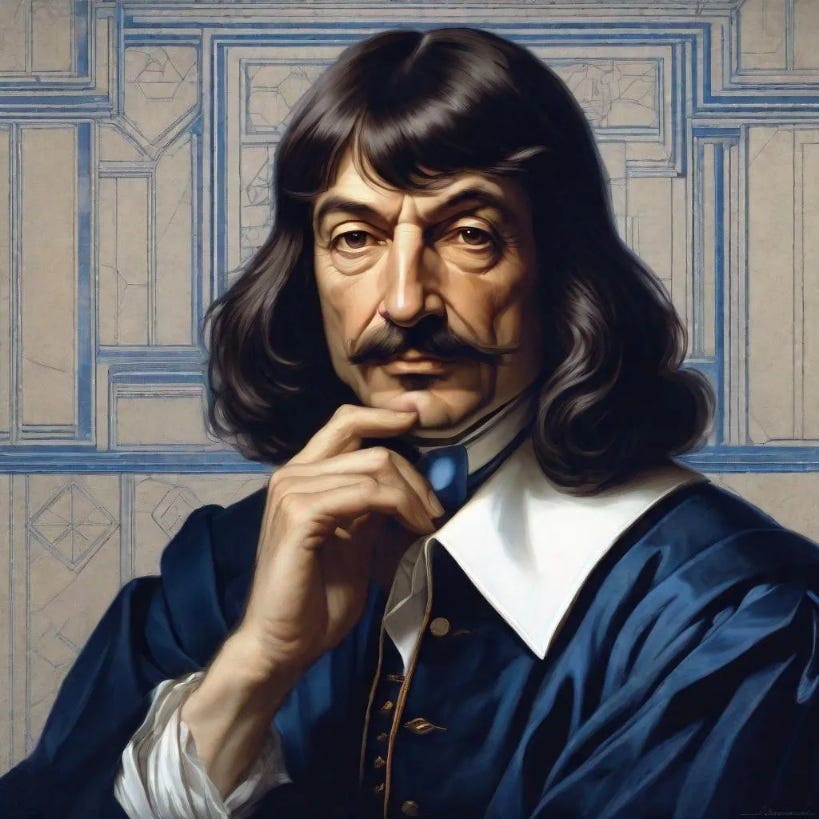
The Stoicism of Descartes. In the 17th century, Rene Descartes, the father of modern philosophy, described how his famous epistemological meditations led him to develop a moral code, based upon three central maxims. The first two of these refer to respect for custom and consistency in life. However, Descartes’ account of his third maxim provides a remarkable expression of certain ideas that have a markedly Stoic flavour. … (Donald Robertson's Substack)
If you quit social media, will you read more books? Here’s a thought many of us have these days: if only we weren’t on our damn phones all the time, we would surely unlock a better self—one that went on hikes and talked more with our children and felt less rank jealousy about other people’s successes. It’s a nice idea; once a day, at least, I wonder what my life would be like if I smashed my phone into bits and never contacted AppleCare. Would I become a scratch golfer or one of those fathers who does thousand-piece puzzles with his children? Would I direct ambitious films that capture the Zeitgeist? Would I at least read more difficult novels? … (New Yorker)
Yes but reading essays here is like books. I read many with Audio. Took me two hours reading Chabon m “ the adventures if k. A nd Clay”. Five chapters. Just saw the Met opera .
The discussion reminds me of church dogma when groups huddle around one verse with fierce verve. Whatever stoic physics is, as physics is a field of mathematics and a relationship to philosophy in the modern age, this century, hard to find any way to correlate quantum mechanics to ethics. The concept of atoms as we know now were different from Marcus. Studying physics is helpful. If I could grasp the coordinates it b with Descarte. We all have the task of ascertain what is goodir ethical and strive. We can disagree, but leave stoic physics out